
Shopping Cart
At the table / A guide to choosing well
Jamón or paleta: which to choose for home or as a gift
Whole pieces or sliced packs, for home or as a gift: the questions that help you choose between jamón and paleta.

Written byThe Productos de la Sierra team · 5 min read
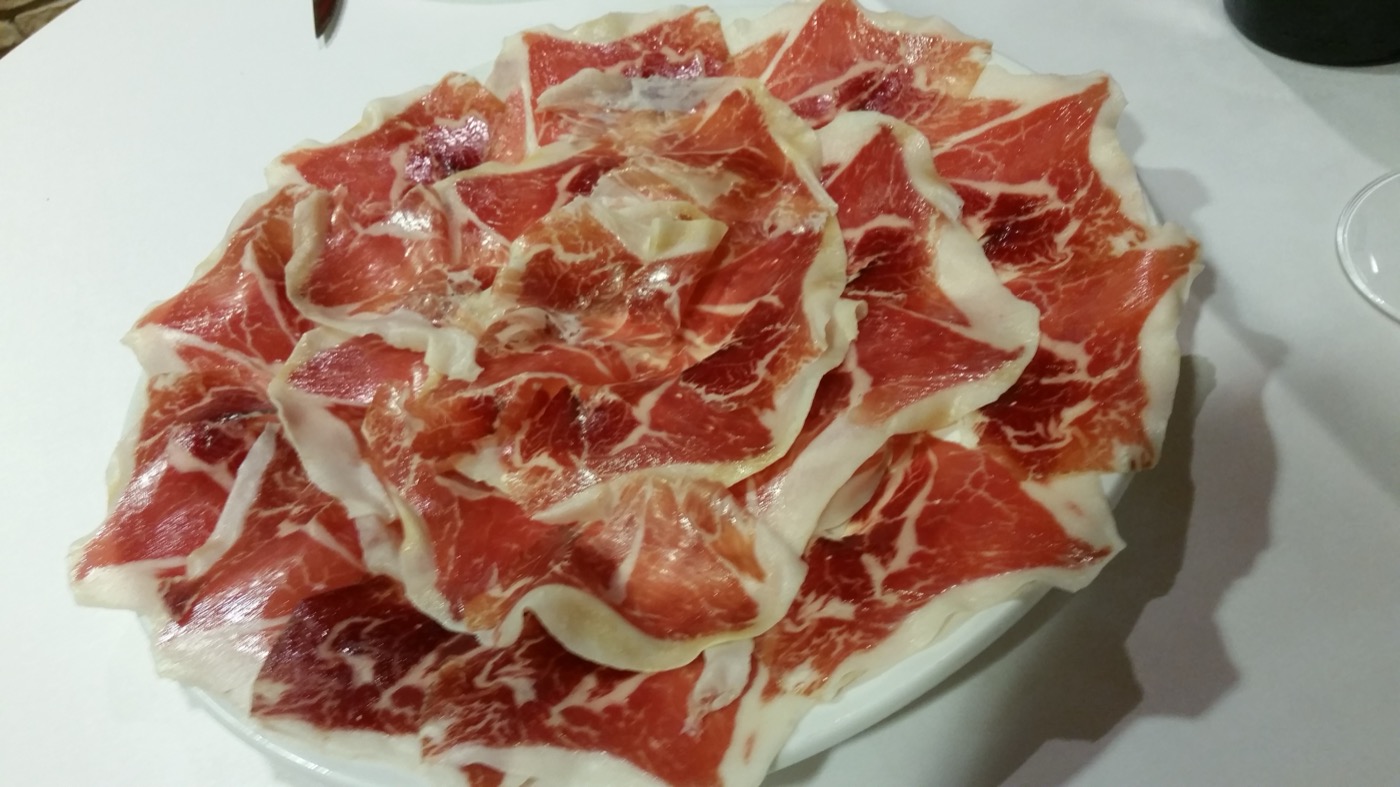
The choice between jamón and paleta usually comes up before a celebration or when looking for a gift. Both can be 100% Ibérico acorn-fed (bellota) and carry the same black seal; what changes is the size, the curing time, how much you get once it is carved and the way you enjoy it. Here is what helps you choose well.
The difference between jamón and paleta
Jamón is the pig’s hind leg; paleta is the front leg, also called the shoulder. Jamón is larger and has more meat in the maza, the wide part of the piece. Paleta is slimmer and has more bone in proportion to its meat; its flavour is intense, and some people prefer it for exactly that reason.
Size also determines the time spent in the drying cellar. The Spanish quality standard for Ibérico products (Royal Decree 4/2014) sets a minimum of 600 days for hams under 7 kg, 730 days for hams of 7 kg or more and 365 days for shoulders. Good pieces usually spend much longer: our 100% Ibérico bellota ham is cured for 36 to 48 months.
What the black seal means
Every Ibérico ham and shoulder carries a coloured seal, attached at the slaughterhouse, that shows the pig’s breed and how it was fed:
| Seal | Name | What it means |
|---|---|---|
| Black | De bellota 100% ibérico | Purebred Ibérico pig, finished in the montanera season on acorns and pasture in the dehesa. |
| Red | De bellota ibérico | Crossbred Ibérico pig, also finished in the montanera. |
| Green | De cebo de campo ibérico | Pig raised outdoors, fed on pasture and feed. |
| White | De cebo ibérico | Pig fed on feed on a farm. |
The bellota ham and shoulder in this guide carry the black seal. Sliced packs use a label of the same colour as the seal of the piece they come from, so you can recognise the category when buying slices too.
Whole piece, boned or sliced
| Format | Best for | Good to know |
|---|---|---|
| Whole piece | Homes where it is carved often, celebrations and gifts for someone with a ham stand. | You need a ham stand, a long knife and some practice. Once started, cover the cut surface with its own fat or a cloth so it does not dry out. |
| Boned (3 or 4 pieces) | Anyone who wants the whole ham without a ham stand. | Available for our ham. Store it as its label indicates and slice it by hand or with a slicer. |
| Hand-sliced | Occasional eating, ready-to-serve gifts or tasting before buying a whole piece. | 100 g packs, carved by hand. Open them at room temperature. |
The weight of the piece is not what reaches the plate
A whole piece includes bone, rind and the outer fat that is trimmed while carving. As a rough guide, what ends up as slices is around half the weight of a ham and a little less for a shoulder, which has more bone in proportion. The exact figure depends on each piece and on whoever carves it.
That is why, when comparing prices, you should compare like with like: the price per kilo of a whole piece cannot be set against that of a 100 g pack, which is trimmed product ready to eat.
When to choose jamón and when to choose paleta
- Choose jamón if there are many of you, if you will enjoy it over several weeks or if you want the most impressive piece for a gift. Our 100% Ibérico bellota ham comes in pieces from 6.5 to 8 kg.
- Choose paleta if there are only a few of you at home or you want to finish it sooner: at 4 to 6 kg it goes faster and the outlay is smaller. Take a look at our 100% Ibérico bellota shoulder.
- Choose sliced if you have no ham stand or prefer to open only what you will eat. There is hand-sliced Ibérico bellota ham and sliced 100% Ibérico bellota shoulder, both in 100 g packs. With one pack of each you can hold a tasting at home and decide which you like best.
Each product page shows the weights we have available at the time.
How to serve it at its best
Ibérico is best at room temperature, when the fat turns glossy and releases all its aroma. If you buy sliced, take the pack out of the fridge a while beforehand; if you are in a hurry, hold it under cool running water for a few minutes before opening. Then lay the slices out on the plate and wait about ten minutes for them to recover their flavour and texture.
With a whole piece, carve thin, small slices, only as many as will be eaten right away. A well-carved plate looks better than a full one.
Frequently asked questions
Is paleta just a small ham?
No. It is the pig’s front leg, with its own shape, its own curing times and its own flavour. It is not a lesser category of ham but a different cut.
Which is better as a gift?
If the person has a ham stand and enjoys carving, a whole piece is the classic gift. If not, a few hand-sliced packs can be enjoyed from day one and ask nothing of them.
How long does an opened piece keep?
Well covered and in a cool, dry place, it keeps in good condition for several weeks, although it is best not to stretch it out too long so it does not dry out. If there are only a few of you, paleta or sliced packs are a better choice.
How should I store the packs?
Unopened, in the fridge or a cool place, and within the date shown on the pack. Remember to take them out before serving: served cold, Ibérico loses much of its aroma.
You can see every format in our selection of Ibérico hams and shoulders. And to complete your board, find out what Ibérico morcón is and how to serve it.


