
Shopping Cart
At the table / A guide to choosing well
What is Ibérico morcón and how do you serve it?
A guide to Ibérico morcón: how it differs from chorizo and how to make room for it on your next charcuterie board.

Written byThe Productos de la Sierra team · 4 min read
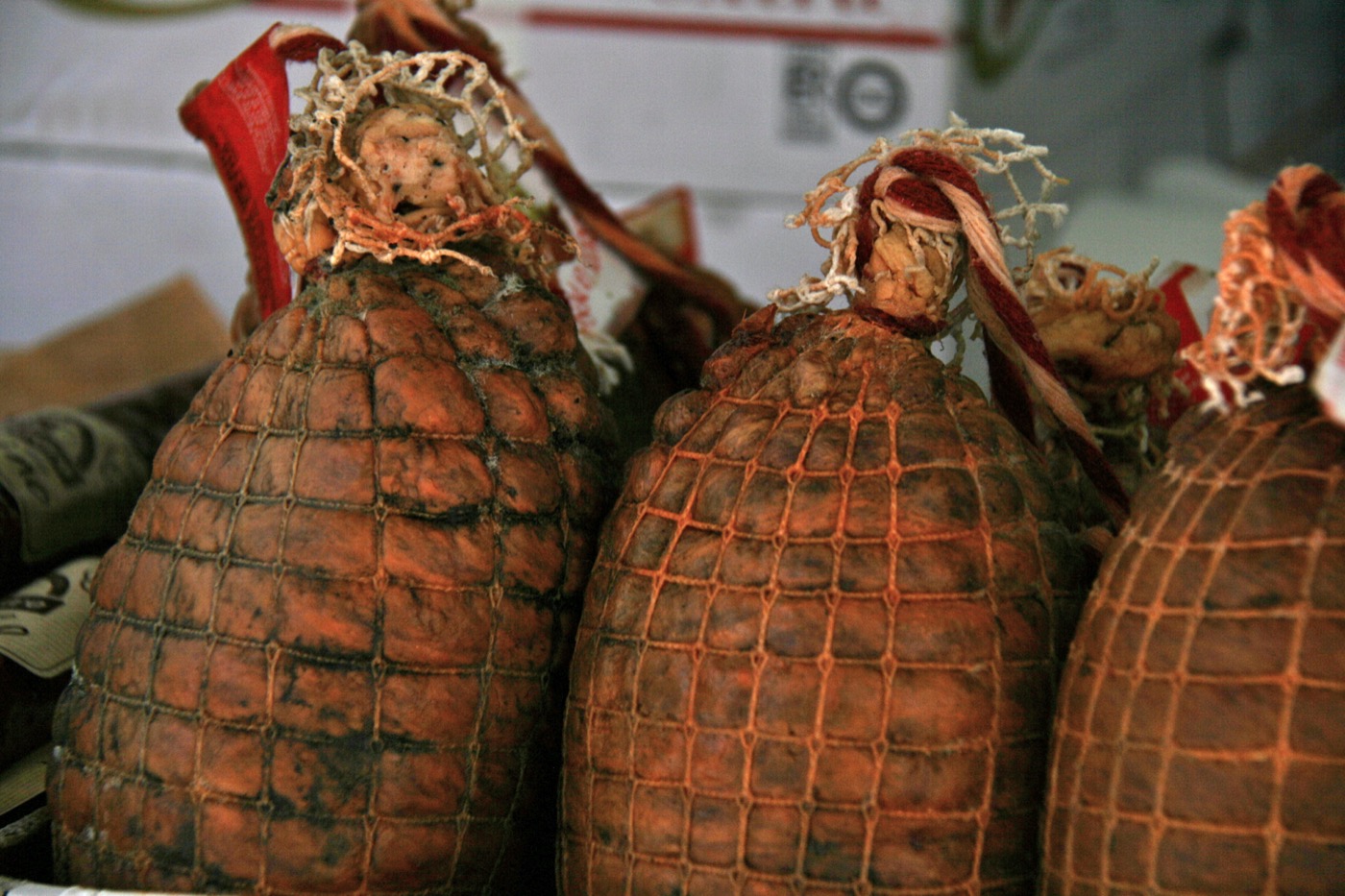
Morcón is one of the least known Ibérico cured sausages and one of the most surprising to taste. It shares chorizo’s paprika and garlic seasoning, but its shape, its cut and its texture are different. Here is what it is, how it differs from chorizo and how to serve it.
What Ibérico morcón is
It is a cured sausage made from Ibérico pork, marinated with paprika, garlic and salt. What sets it apart is the casing: instead of chorizo’s narrow casing, the meat is stuffed into the pig’s wide, rounded large intestine, the caecum. It is then tied by hand or wrapped in netting so the piece keeps its shape while it cures.
That explains its thick, slightly irregular look, and why every slice is so wide. The meat goes in larger pieces than in chorizo, so when you cut it the lean and the fat are easy to tell apart. And because it is thicker, it needs a longer curing time.
How morcón differs from chorizo
| Morcón | Chorizo | |
|---|---|---|
| Casing | Wide and rounded (caecum) | Narrow, in a horseshoe or straight |
| Meat | In large pieces; ours is Ibérico loin | More finely chopped |
| Shape | Thick piece, tied or netted | Long and thin |
| Curing | Longer, because of its thickness | Shorter |
| When sliced | Wide slices with visible pieces of lean meat | Small, even slices |
If you like Ibérico chorizo, morcón is the natural next step: the same seasoning, with more bite and more presence on the board.
The Ibérico loin morcón in our shop
Our Ibérico loin morcón is made by hand in the Sierra de Aracena from Ibérico pork loin. It is sold as a whole piece of about 750 to 800 g, enough for several boards.
Being made from loin makes the difference. Loin is one of the leanest and most prized cuts of the Ibérico pig, so the result is a morcón with plenty of lean meat, where the seasoning comes through without masking the flavour of the pork.
How to serve it on a charcuterie board
- At room temperature. Take it out of the fridge a while before slicing: cold, it loses aroma and the fat does not shine.
- Peel only what you will slice. Remove the netting and casing from the end you are serving and keep the rest covered.
- In thin slices, with a sharp knife. As they are wide, you can halve them if you prefer smaller bites.
- In good company. Bread, breadsticks or crackers, and a mature cheese on another part of the plate so everyone can combine them as they like. A young red wine or a cold beer goes very well with it.
For a complete Ibérico board, pair it with loin, chorizo and a few slices of ham or shoulder. Lay them out separately, from mildest to most intense, to appreciate the differences.
How to store it
Whole and unopened, in a cool, dry place. Once started, cover the cut end with cling film and keep it in the fridge; remember to take it out in good time before serving it again. The best-before date is on the label.
Frequently asked questions about morcón
Are morcón and morcilla the same thing?
No. Morcilla is a blood sausage and is often cooked. Cured Ibérico morcón contains no blood and is eaten as it is, like chorizo or salchichón.
Does it need cooking?
No. Cured morcón is eaten in thin slices, uncooked. In some regions the name morcón is given to other products that are cooked, but that is not the case here.
Why does it have netting or string?
To hold the casing in place while it cures so the piece keeps its shape. Remove it before slicing.
Is all morcón made from loin?
No. Each producer uses its own selection of meat. Ours is made from Ibérico loin, one of the leanest versions.
You can order the Ibérico loin morcón or explore the rest of our Ibérico cured sausages to build your own board. And if you are unsure about ham, we help you choose between jamón and paleta.
